
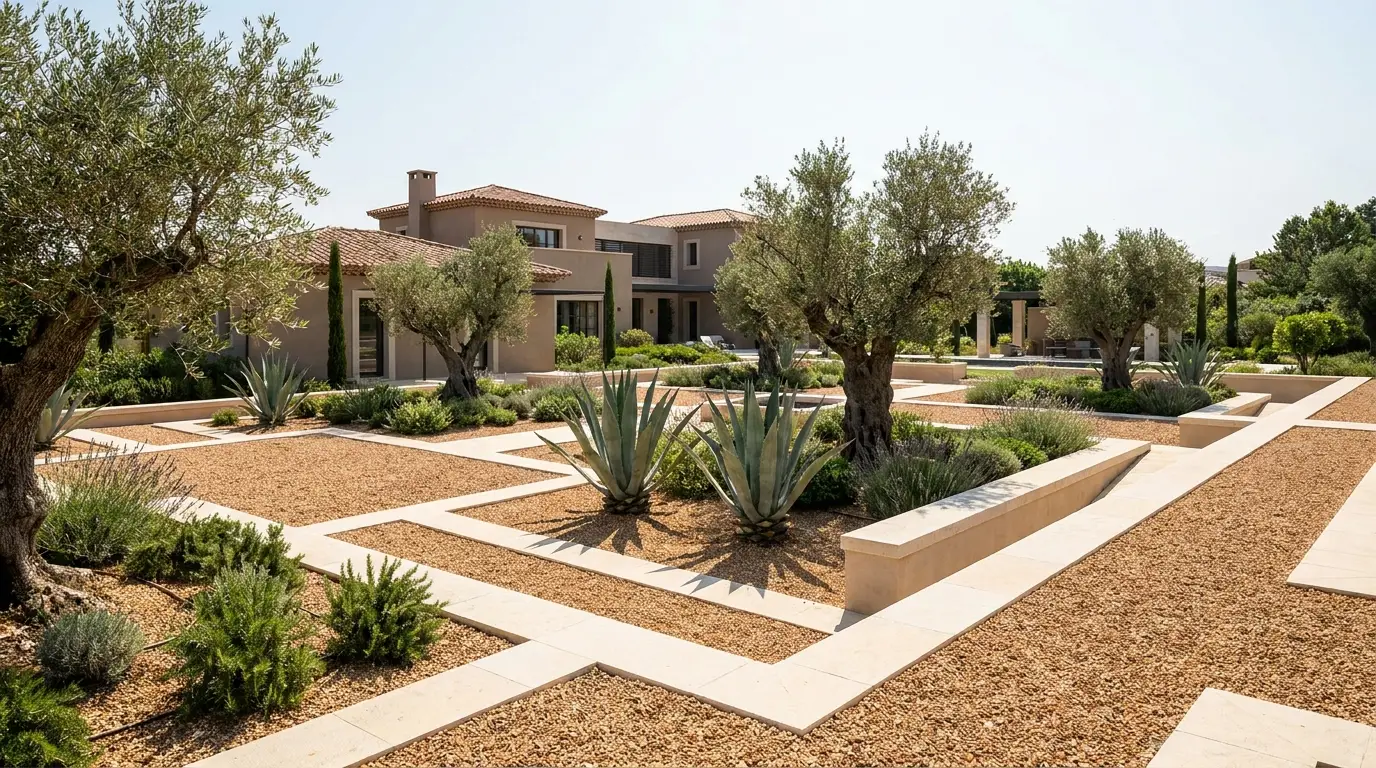
The transition to low-maintenance landscaping has made decorative gravel a cornerstone of luxury properties across the Region of Murcia and the Costa Blanca. However, property developers and expat homeowners are unknowingly destroying their high-value specimen plants in the pursuit of a flawless minimalist aesthetic. The silent killer in these modern coastal gardens is not an exotic pest, a systemic disease, or even a lack of irrigation; it is a severe, engineered micro-climatic anomaly known as Albedo-Induced Root Hyperthermia.
At SERVINMOSOL, our lead agronomic engineers routinely inspect failing Mediterranean gardens where seemingly pristine hardscaping is literally cooking the root systems below. When unqualified contractors lay down inappropriate stone aggregates combined with suffocating plastic weed barriers, the resulting thermal mass creates a lethal oven effect. This comprehensive guide dismantles the complex physics of this phenomenon and provides the technical blueprint for sustainable, climate-adapted gravel landscaping in high-net-worth Spanish estates.
The Physics of Hardscape Thermal Overload
In the extreme summer climate of the Spanish Levant, spanning from the coastal plains of Alicante to the arid interior of Murcia, ambient daytime temperatures frequently exceed forty degrees Celsius. When luxury properties are covered in highly reflective or highly absorptive stone aggregates, the local energy balance of the garden is drastically altered. White marble gravels, heavily favored for their clean, contemporary aesthetic, possess a tremendously high albedo effect. They reflect intense, unmitigated solar radiation directly up into the underside of the plant canopy.
This reflected radiation effectively doubles the transpiration rate of even the most drought-tolerant Mediterranean plants, pushing species like ancient olive trees and majestic carobs rapidly past their permanent wilting point. Conversely, dark slates or basalts operate differently but with equally destructive consequences. These dark materials absorb shortwave radiation throughout the long Spanish summer days and re-emit it as longwave thermal radiation throughout the night.
This continuous heat emission completely eliminates the natural diurnal cooling cycle that Mediterranean flora depend upon to recover from daytime physiological heat stress. The soil temperature directly beneath these dark aggregates can effortlessly reach sixty degrees Celsius. At these extreme temperatures, the biological machinery of the plant shuts down. Root elongation ceases entirely, and the microscopic fine feeder roots, responsible for water and nutrient uptake, are physically incinerated.
The Catastrophic Role of Impermeable Weed Barriers
This thermal crisis is exponentially worsened by the pervasive, industry-standard practice of installing cheap, woven polypropylene weed fabrics directly beneath the decorative gravel. These plastic sheets are often falsely marketed as breathable by low-tier landscapers. However, under the physical weight of the stone layer and the inevitable accumulation of fine atmospheric dust from Calima events, the microscopic pores of these plastics quickly become permanently sealed. This creates a highly toxic, anaerobic environment in the critical upper soil horizon.
Once the soil surface is sealed by an impermeable plastic barrier, all natural gas exchange violently ceases. Oxygen, the vital fuel for root respiration, cannot penetrate the root zone, and toxic carbon dioxide, a byproduct of respiration, cannot escape into the atmosphere. The complex natural soil microbiome, which is absolutely essential for nutrient cycling and disease resistance, rapidly collapses under these suffocating conditions.
Beneficial aerobic bacteria and mycorrhizal fungi are swiftly replaced by aggressive anaerobic pathogens. This shift inevitably leads directly to catastrophic root rot, devastating fungal infections like Phytophthora, and sudden plant death syndrome in mature hedges, luxury palm installations, and irreplaceable specimen trees.
Agronomic Protocols for Safe Gravel Integration
To protect your financial investment and ensure the long-term biological viability of your landscaping, SERVINMOSOL emphatically mandates the complete elimination of woven plastic weed barriers in all premium landscaping projects. True climate resilience requires an advanced technical approach to hardscaping that unconditionally prioritizes soil respiration, moisture management, and thermal buffering. Our proprietary engineering protocols focus on meticulously restoring the natural synergy between the inorganic mineral layer and the active biological layer.
Our scientific approach begins with rigorous substrate preparation before any decorative aggregate is introduced to the site. The native, often compacted Spanish soil must be deeply aerated using specialized machinery and aggressively amended with high-lignin organic matter. This creates a robust structural buffer that strongly resists future compaction. We then implement a specialized, multi-layered filtration system that successfully suppresses weed emergence without compromising the critical oxygenation of the underlying root system.
Advanced Materials and Technical Execution
Selecting the exact correct materials is entirely non-negotiable for high-end coastal properties facing extreme solar radiation. The specification of the gravel itself must be precisely tailored to the specific microclimate of the estate, taking into careful account the solar aspect, prevailing wind patterns, and the specific physiological requirements of the installed botanical palette.
- Permeable Non-Woven Geotextiles: Immediately replace all plastic sheets with thermally bonded, non-woven geotextiles. These advanced structural fabrics allow for maximum water percolation and completely unrestricted gas exchange while effectively separating the native soil from the decorative aggregate layer.
- Volcanic Aggregates: Whenever architecturally possible, integrate highly porous volcanic rocks into the hardscape design. These unique materials possess exceptionally low thermal conductivity, meaning they trap insulating air within their structure and do not transfer lethal, concentrated heat downward into the vulnerable soil profile.
- Strategic Organic Mulching Rings: Around the critical drip line of all high-value specimen trees, decorative gravel must be strictly replaced with a thick, protective layer of organic, composted wood chips. This scientifically creates a cool, biologically hyper-active rhizosphere where delicate feeder roots can thrive and forage for nutrients.
- Calibrated Aggregate Depth: Strictly limit the total depth of the decorative stone layer to an absolute maximum of five centimeters. Deeper layers inherently create an impenetrable thermal blanket that artificially traps heat and severely prevents the natural evaporation of excess, potentially rotting soil moisture.
Recognizing the Symptoms of Root Hyperthermia
Property owners, estate managers, and community presidents must proactively learn to identify the early, subtle warning signs of severe thermal stress before the subterranean damage becomes structurally irreversible. Because the visible foliar symptoms often closely mimic standard drought stress, uneducated maintenance gardeners frequently respond by blindly increasing the irrigation volume. This fatal error only accelerates the fungal rotting process within an already oxygen-deprived environment.
Visually inspect the canopy for marginal leaf necrosis, where the outer edges of the leaves turn brown, brittle, and crispy despite the presence of adequate soil moisture. You may also keenly observe a general, systemic loss of vigor, severely stunted new growth during the active spring season, and unnatural premature leaf drop in the lower interior canopy. If you physically peel back the decorative gravel and the underlying weed fabric smells foul, sour, or heavily resembles a swamp, catastrophic anaerobic decomposition is actively destroying your landscape.
Emergency Remediation Strategies by SERVINMOSOL
If your luxury estate is tragically already suffering from these severe engineered defects, immediate and aggressive intervention is technically required. Professional remediation systematically involves physically removing the suffocating plastic layers and implementing advanced vertical mulching techniques. This physical process forcefully introduces vital oxygen back into the stagnant root zone through mechanically drilled aeration columns filled with highly porous structural soils.
Furthermore, customized biostimulants containing concentrated humic acids and beneficial mycorrhizal inoculants must be professionally injected directly into the deep rhizosphere under high pressure. This precisely jumpstarts the biological recovery of the devastated soil web. This highly technical, engineering-led remediation is the only scientifically proven method to salvage mature, high-value plants that have been chronically compromised by negligent, purely aesthetic hardscaping practices.
Conclusion
The highly desirable pursuit of a pristine, low-maintenance, weed-free Mediterranean garden should absolutely never become a slow death sentence for your most valuable botanical and financial assets. By thoroughly understanding the profound physical forces and thermal dynamics at play beneath the beautiful surface of decorative gravel, property owners can firmly make informed, science-based decisions that simultaneously protect both their architectural vision and their long-term agronomic investment.
Expert Advice from SERVINMOSOL: Never compromise the vital breathability of your soil merely for the fleeting sake of weed control. If you are planning a high-end hardscape renovation in Alicante or Murcia, explicitly demand technical specifications for thermal conductivity and gas permeability from your contractors, or consult directly with a qualified agronomic engineer to ensure your luxury landscape does not silently become a lethal furnace.