
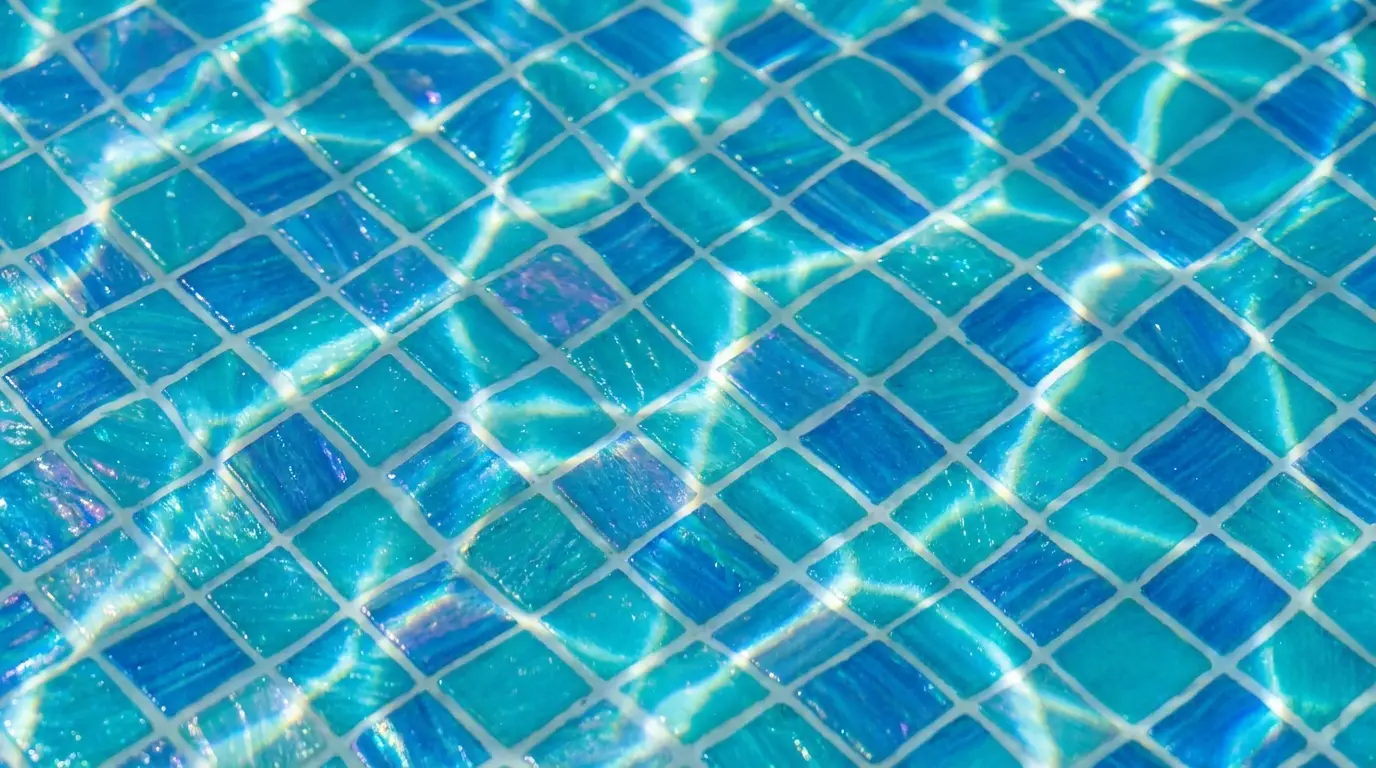
For presidents of premier residential communities and owners of exclusive frontline villas in the Región de Murcia and Costa Blanca, a tiled pool featuring premium glass mosaic (gresite) represents the pinnacle of Mediterranean architectural elegance. However, thousands of these luxury assets are currently suffering from a highly visible, devaluing aesthetic and sanitary failure. Tiles are un-bonding from the substrate, grout lines are crumbling into white powder, and deep black spots are permanently staining the joints, resisting even the most aggressive chlorine shock treatments.
This widespread operational degradation is not a natural symptom of aging, nor is it an unavoidable consequence of heavy bather loads. Instead, it is the direct consequence of severe chemical ablation and biological colonization targeting the tile joint matrix. This is a highly technical material-science problem that cannot be resolved by standard pool cleaning protocols or the superficial touch-ups provided by uncertified maintenance laborers.
The Chemical Leaching of Cementitious Joint Matrices
The vast majority of tiled pools in Alicante and Murcia were constructed using standard cementitious grouting mortars. While these mortars are structurally sound initially, their chemical binder consists primarily of calcium silicate hydrate. This specific compound is highly vulnerable to chemical leaching when pool water chemistry is improperly managed, or when the water falls into a negative Langelier Saturation Index (LSI) state.
When pool water is allowed to become aggressive due to low pH or insufficient calcium hardness, it acts as a solvent, actively stripping calcium ions directly out of the tile grout. Over a relatively short period, the solid grout matrix transforms into a soft, highly porous, chalky substance. This chemical leaching reduces the mechanical strength of the joint, allowing water to penetrate behind the glass gresite tiles, causing widespread hydraulic de-bonding and structural tile loss.
Black Algae Colonization: The Rooted Biological Fortress
Once the cementitious grout loses its density and becomes highly porous, it creates an optimal micro-ecological niche for the most dreaded aquatic pathogen: black algae (typically species of Phormidium or Oscillatoria). Unlike standard green algae that floats freely in the water column, black algae behaves like a structural weed, utilizing specialized filaments to root itself deep within the microscopic fractures of the degraded grout lines.
Furthermore, black algae synthesizes an outer gelatinous layer composed of complex lipopolysaccharides. This slimy sheath acts as an impenetrable chemical shield, completely isolating the underlying algal cells from traditional pool sanitizers like liquid chlorine or copper algicides. Shocking the pool may temporarily bleach the top surface of the black spot, but the deep vascular roots remain completely intact inside the grout, allowing the organism to regenerate and spread aggressively across the pool floor within days.
The Destructive "Chapuza": Hydrochloric Acid Ablation and Amateur Regrouting
The pool maintenance market across southeastern Spain is plagued by extreme labor intrusion, where basic gardeners and low-cost uncertified handymen present themselves as pool renovation experts. When confronted with stained grout or black algae outbreaks, their default corrective action is an absolute technical disaster: draining the pool and performing a brutal manual wash using raw, undiluted hydrochloric acid (locally known as salfumán).
While an aggressive acid wash temporarily strips away the top layer of algae and stains, it causes catastrophic, irreversible damage to the pool structure. Hydrochloric acid forcefully dissolves the calcium binder within the cement grout, instantly eating away up to fifty percent of the remaining joint depth. This amateur practice leaves the grout lines profoundly weakened, completely hollowed out, and structurally primed for an even more severe black algae re-infestation during the following swimming season.
The Catastrophic Consequences of Amateurs in Tiled Pools:
- Raw Hydrochloric Acid Stripping: Using un-buffered salfumán destroys the chemical integrity of cement joints, accelerating the de-bonding of adjacent glass gresite tiles.
- Superficial Over-Grouting Chapuzas: Applying a thin layer of new grout directly over old, slime-coated, un-prepped joints, which inevitably flakes off within months due to zero mechanical adhesion.
- Failure to Sanitize Sub-Tile Voids: Regrouting over active black algae roots trapped behind loose tiles, allowing the biological infestation to grow hidden beneath the new surface.
- Destruction of Hydraulic Hardware: Allowing highly acidic wastewater to pass through the main drain, severely corroding copper heat exchangers, pump impellers, and internal valve seals.
The SERVINMOSOL Technical Protocol for Advanced Joint Restoration
At SERVINMOSOL, we completely reject superficial cosmetic patches and destructive acid-washing techniques. We resolve tile degradation and black algae infestations through precise material engineering, industrial-grade preparation mechanics, and the application of next-generation reactive resin technologies designed to safeguard your real estate asset for decades.
Phase 1: High-Precision Mechanical Hydro-Demolition and Substrate Preparation
To ensure absolute adhesion for our remediation materials, we never rely on raw acid. Our technicians utilize specialized mechanical joint-raking machinery alongside high-pressure hydro-demolition equipment operating at calibrated pressures. This process physically carves out the degraded, soft cement grout down to a uniform, clean depth, completely evacuating the deep-seated root networks of black algae and exposing solid structural concrete without damaging the delicate edges of the glass gresite tiles.
Phase 2: Hyper-Concentrated Biocidal Ablation
Once the joints are mechanically cleared, the exposed subterranean channels are treated with a specialized, high-density quaternary ammonium compound coupled with polymeric biguanides. This hyper-concentrated biocidal solution penetrates deep into any microscopic voids or structural pores beneath the tile matrix. It completely eradicates any latent algal spores or hidden bacterial biofilms, ensuring that the structural envelope is entirely sterile before the final sealing phase begins.
Phase 3: Structural Sealing with Two-Component Reactive Epoxy Resin Grouts
Instead of repeating the mistakes of the past with standard cement mortars, SERVINMOSOL fills the prepared joints with premium, two-component reactive epoxy resin grouts compliant with international EN 13888 RG standards. This advanced chemical compound cures via an exothermic chemical reaction, creating a completely non-porous, glassy polymer structure that is entirely impervious to chemical leaching, acid attacks, and mechanical erosion.
Because our epoxy joint matrix has zero water absorption, it completely eliminates the environmental conditions required for black algae to root or colonize. Furthermore, its exceptional flexural strength provides a durable, semi-flexible structural grid that holds the glass tiles firmly in place, neutralizing the risk of future de-bonding even under the extreme thermal expansion cycles of the intense Murcia and Alicante summers.
Safeguarding Your Community Infrastructure and Capital Investment
For community presidents managing massive multi-property pools and owners of high-end private villas, the pool's tiled surface is a core financial asset. Allowing uncertified, low-cost maintenance workers to butcher your pool with raw acid and cheap cement patches results in continuous tile loss, perpetual closure due to sanitary violations, and an eventual requirement for an expensive, total structural rebuild.
Conclusion and Technical Directive
Maintaining a flawless, hygienic tiled pool within the demanding climates of Murcia and the Costa Blanca requires advanced knowledge of material science, precise hydraulic sanitization, and chemical resin engineering. True long-term joint durability and absolute biological resistance are only achieved when cementitious mortars are abandoned in favor of industrial-grade reactive polymers applied by certified technical masters.
Expert Advice: Never allow your pool maintenance provider to perform an acid wash on your tiled pool using un-buffered hydrochloric acid, and completely ban the practice of applying new grout directly over old joints. Demand a comprehensive technical evaluation of your pool's joint density and an epoxy remediation strategy. Contact the technical engineering and luxury pool restoration division at SERVINMOSOL.COM today to secure an uncompromising, lifetime solution for your premium aquatic assets.